Musik & Release
Why streaming alone is no longer enough: how to build your own independent platform
 Robert Cummings — Digital Consultant & zertifizierter BAFA-BeraterPublished on 30 August 20269 min read
You prepared your release properly. Artwork, press text, timeline — everything in place. And then release day comes, the song goes live, and it disappears in the search results between thousands of other tracks, an increasing proportion of which no longer come from humans at all.
That is not an exaggeration. The major streaming platforms are now openly fighting a flood of AI-generated music — with new features such as verification badges and safeguards for artist profiles, because real musicians are increasingly getting lost inside the platforms' own libraries. For established names with millions of listeners, that is annoying. For you, still building an audience, it is something else entirely: the platform you rely on is becoming fundamentally less dependable as a place to be discovered.
The good news: you never depended on an algorithm finding you. You have already taken the first step — you took ownership of your music before you shared it. Now we will show you how to build an independent platform on top of that, one no algorithm owns.
The problem with the big platforms
This is not about spreading panic. Streaming platforms have not suddenly become useless, and nobody is telling you to turn your back on Spotify or Apple Music. But the role these platforms play for independent musicians has shifted — in a direction that makes it harder to be found at all.
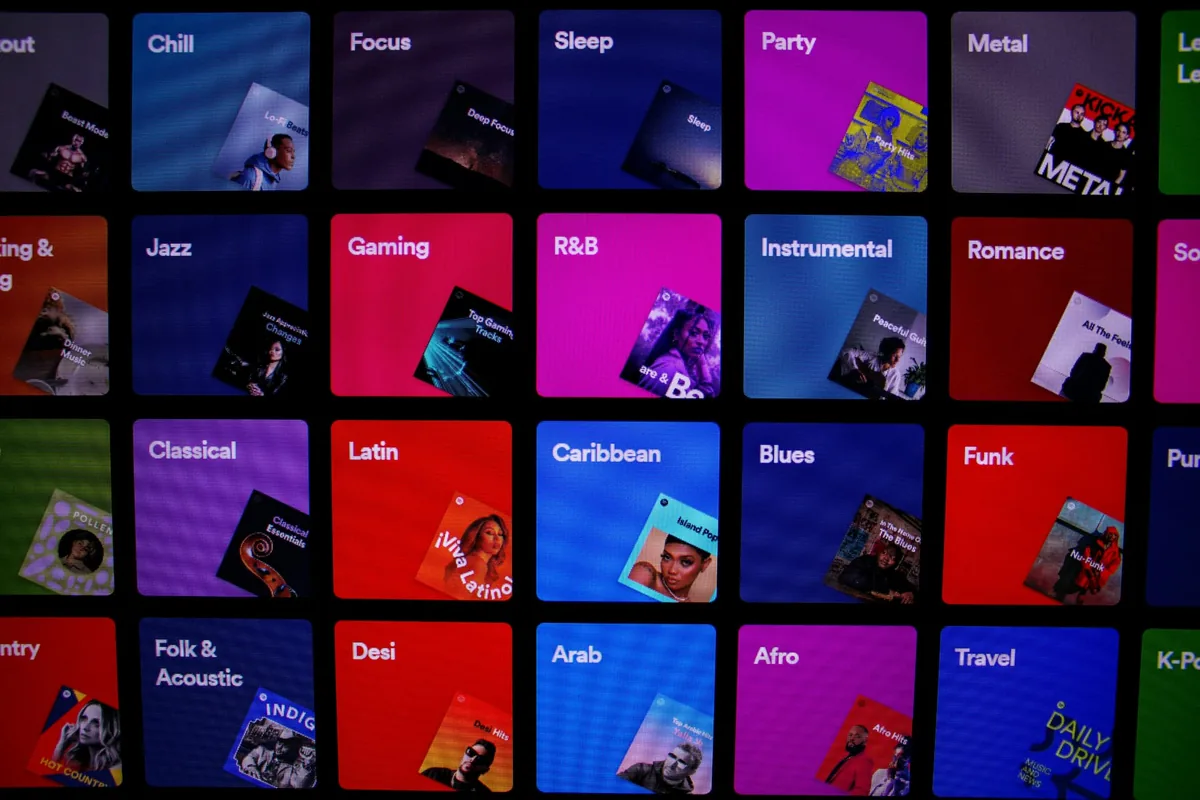
The reason lies not only in the sheer volume of new music, but in how that volume comes about. A growing share of the tracks uploaded every day no longer comes from musicians trying to build an audience, but from automated systems optimised for stream counts. That changes how curators, algorithms and even human listeners deal with new music: suspicion grows, attention spans shrink, and the willingness to click through endless suggestions drops.
The platforms themselves are responding — but not with better discovery for real artists, rather with safeguards. Verification badges confirming that a profile genuinely belongs to a human. Features that stop third-party uploads from landing on your artist profile. These are sensible measures — but they solve a different problem from the one you are facing. They protect your identity. They do not help you get found.
Important: One detail shows how far things have shifted: even major labels are now actively pushing back against their catalogues being used to train AI models without consent — a sign of how seriously the entire industry takes the problem. If even billion-euro labels have to defend control over their own music, it is no surprise that independent musicians without those resources lose the overview.
For you, that means: do not rely on a platform making you visible on its own. It was never designed so that a handful of listeners would discover a new, unknown band — it was designed to maximise consumption. Which is exactly why it pays to look at places that work differently.
The alternative: artist-first storefronts
If the big platforms optimise primarily for consumption, it is worth looking at a different category of place: platforms deliberately built for musicians rather than for maximum throughput. They are not a replacement for Spotify or Apple Music — but they give you something that is structurally missing there: direct contact with your listeners, a fair share of the revenue, and the certainty that you are more than one line in an endless playlist.

What these platforms have in common
- They sell music directly to listeners instead of merely streaming it — you know who buys, and you can nurture that contact
- They give you a considerably larger share of the revenue than classic streaming
- They can be embedded as a widget directly on your own website — another reason why your own home and these platforms belong together rather than compete
Bandcamp
You set the prices yourself, listeners can voluntarily pay more, and you keep the bulk of the revenue. Bandcamp bans fully AI-generated music from the platform — a clear commitment to real artists.
Subvert
A cooperatively organised alternative: the platform is owned by the musicians and labels who use it, not by a single company. Almost all of the revenue goes to you.
Ko-fi
Ideal for direct support: fans can support you once or monthly, straight from a widget on your website. Low fees, quick to set up.
Patreon
The standard for recurring memberships. Ideal for building a loyal core audience that contributes regularly — for exclusive content, early access, or simply out of support.
These platforms do not, however, solve the underlying problem: each one is again a place you do not fully own — just a fairer one. The real question remains where all of it comes together.
Why your own website remains the foundation
Everything discussed in this article and the last one — artwork, press text, timeline, fair storefronts — comes down to one question: where does all of it converge into a place that genuinely belongs to you?
Every platform service, every storefront, every streaming service is a channel. A channel is useful, sometimes even indispensable — but it does not belong to you. It follows the rules, the business model and the current priorities of a company that does not know your career and whose interests can change at any time. An algorithm update, a new monetisation strategy, an acquisition — and the visibility you worked hard to build can disappear overnight. That is not a hypothetical risk. It is how every platform you do not control works.
Your own website works by different rules — yours. It is the only place in the entire ecosystem that cannot be re-weighted, switched off or changed against your interests. And it is the only place that holds everything else together: your artwork, your story, your tour dates, your press kit — and, as described in the last section, the embedded storefronts through which listeners can support you directly. Bandcamp, Subvert, Ko-fi, Patreon — none of them rules out having your own website. On the contrary: only on your own website do they add up to a coherent whole, instead of scattered profiles across half a dozen platforms.
That is also why your own website should not be confused with an Instagram profile or a Linktree page. Those places are channels too — rented, not owned, and changeable at any time under someone else's rules. Your own website is something different: a digital home that grows with your career, no matter which platform is currently in fashion or which one still exists in five years.
“Channels come and go. Your home stays.”
That is the difference between a career that depends on the goodwill of individual platforms and one that stands on a foundation of its own. You have already learned to take ownership of your music before you share it. The final step is to give it a place nobody can take away from you again.
Your own platform — step by step
A guided checklist planner that turns the article into concrete steps. Tick each task — your progress is saved on this device.
Take ownership of your music
Before you share anything, make sure everything that belongs to you actually stays with you — not just on a platform's server.
Your progress is saved locally on this device.
We help you build it with web design and a clear content strategy.